Home Security Cameras: Balancing Surveillance and Privacy
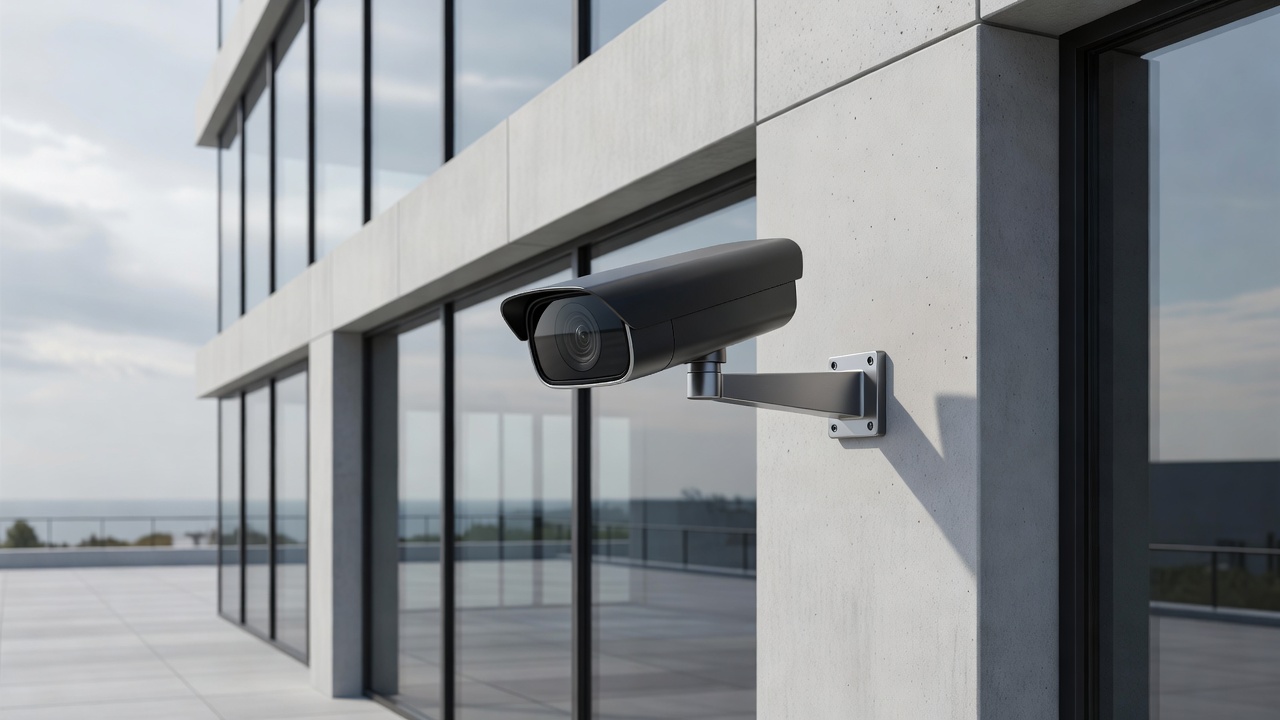
The proliferation of accessible consumer security cameras has fundamentally altered the concept of home surveillance. High-definition recording, once the domain of complex enterprise systems, is now available in compact, wireless units. However, deploying a camera system requires careful consideration regarding power delivery, data storage, and network privacy.
Wired vs. Wire-Free Deployments
The most immediate decision in setting up a camera network is the power source. Battery-powered (wire-free) cameras offer immense flexibility in placement. They can be mounted to trees, fences, or exterior walls without drilling for cables. The trade-off is maintenance and functionality; they must be recharged, and to conserve battery, they typically only record when motion is detected, utilizing PIR (Passive Infrared) sensors. This can sometimes result in a delay, capturing the back of a subject's head as they leave the frame.
Hardwired cameras (powered via standard AC or Power over Ethernet - PoE) offer continuous 24/7 recording. PoE is widely considered the gold standard for robust security. A single Ethernet cable delivers both power and network data, ensuring an uninterrupted stream that isn't susceptible to Wi-Fi jamming or signal degradation through brick walls.
Storage Solutions: The Cloud vs. Local NVR
How and where video data is stored dictates both the ongoing cost of the system and the level of data sovereignty.
- Cloud Storage: The default for most consumer brands. Footage is uploaded directly to remote servers. This protects evidence if the physical camera is stolen, and allows easy viewing from anywhere. The drawbacks include recurring monthly subscription fees and the privacy implications of hosting continuous video feeds on third-party servers.
- Local Storage (NVR/microSD): Network Video Recorders (NVR) or edge storage (microSD cards in the camera) keep data strictly within your home network. There are no monthly fees, and the footage remains entirely under your control. The primary risk is hardware failure or physical theft of the recording unit.
Field of View, Resolution, and Night Vision
Specifications directly impact the utility of recorded footage. While 1080p resolution is standard, 2K and 4K sensors provide the digital zoom capabilities required to read license plates or identify facial features at a distance. However, higher resolution drastically increases bandwidth usage and storage requirements.
Furthermore, field of view (FOV) dictates how much area is monitored. A wide 130-degree FOV is excellent for a driveway, but may distort edges (fisheye effect). For night vision, traditional infrared (IR) provides a clear black-and-white image in total darkness, while newer "Color Night Vision" requires ambient light (like a streetlamp) or a built-in spotlight to render color imagery after dark.
Privacy and End-to-End Encryption (E2EE)
Placing internet-connected cameras in and around a home inherently introduces security risks. To mitigate unauthorized access, it is critical to verify if a camera manufacturer supports End-to-End Encryption (E2EE). E2EE ensures that the video stream is encrypted before leaving the device and can only be decrypted by your verified mobile device. Without E2EE, it is theoretically possible for employees of the camera company, or bad actors who compromise the company's servers, to view the footage.
Conclusion
A strategic deployment often utilizes a mix of technologies: PoE cameras for critical exterior chokepoints requiring 24/7 recording, and battery-powered units for flexible indoor or garden monitoring. Always evaluate the long-term subscription costs and privacy policies before committing to an ecosystem.